Tiny house as a glamping investment: what can you really earn on Airbnb and Booking?
Real estate investment in the Czech Republic is going through a transformation. Alongside classic apartments for long-term rental, investors are looking for alternatives with higher yield and a lower entry price. One of the most interesting options in recent years is a tiny house as a glamping investment – a small mobile home placed in an attractive location and rented out to tourists via platforms like Airbnb or Booking.com. In this article, we’ll walk through real calculations of income, expenses and returns, so you know what you’re getting into and can avoid both rosy illusions and needless worries.
The main question every investor asks is simple: how much does a tiny house actually earn? The answer isn’t a single number but a range depending on location, seasonality, equipment, and the quality of presentation. Let’s look at it concretely, with figures.
Why a tiny house specifically as a short-term rental investment
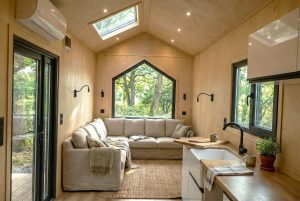
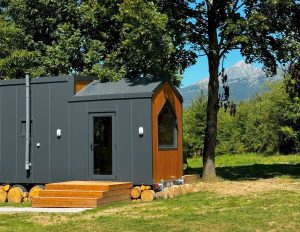
A tiny house combines several advantages that traditional real estate doesn’t offer. The upfront investment is significantly lower than for a recreational cottage or apartment – a quality mobile home from VI invest costs CZK 1,399,000 to 1,599,000 excl. VAT. Thanks to its mobility and the nature of the structure, the lengthy construction processes that take years for a classic property are often avoided.
From the guest’s point of view, it’s an experience. The glamping trend – luxury camping with the comfort of a hotel – keeps growing, and guests are willing to pay a premium price for original accommodation in nature. That’s precisely why a tiny house generates more per night than an ordinary guesthouse room in the same area.
What affects the level of return
- Location – proximity to tourist destinations, nature, and accessibility by car.
- Occupancy – the number of booked nights per year, typically 40–65% depending on the region.
- Price per night – in the Czech Republic, prices for glamping tiny houses range between CZK 2,500 and 4,000/night.
- Seasonality – summer and weekends draw guests; winter and weekdays lag behind.
- Quality of presentation – professional photography and reviews substantially increase occupancy.
Income: how much a tiny house earns per year
Let’s start with income. Assume an average price of CZK 3,200 per night, a realistic mid-point of the price range for a furnished tiny house in an attractive location. The key variable is occupancy.
| Scenario | Occupancy | Booked nights/year | Gross income/year |
|---|---|---|---|
| Conservative | 40% | 146 | CZK 467,200 |
| Realistic | 50% | 183 | CZK 585,600 |
| Optimistic | 62% | 226 | CZK 723,200 |
These figures, however, are gross income before deducting platform commissions, operating costs and taxes. This is exactly where many beginning investors go wrong – they calculate with the gross figure and then are disappointed by the net profit.
Seasonality and its impact
Seasonality is crucial in the Czech Republic. In July and August, on long weekends, and around Christmas and New Year, you can reach occupancy of over 80% and set higher prices. Conversely, in November, January and February outside holidays, occupancy drops to 20–30%. The annual average therefore comes out around the mentioned 50%. Smart pricing (dynamic pricing) and add-on services like a sauna or a hot tub significantly boost winter occupancy and extend the season.
Expenses: what eats into the profit
For the calculation to be honest, we must deduct all costs from income. We’ll split them into platform commissions, operating costs, and taxes.
Booking platform commissions
Both Airbnb and Booking.com charge a commission on every reservation. In practice, count on 15–25% of the stay’s price. Booking.com tends to be at the upper end (15–18% standard, over 20% with visibility programs), Airbnb is usually around 15% under the split-fee model. If you want to reduce commissions, it pays to build your own booking channel (your own website, direct bookings), but in the beginning, platforms are irreplaceable because of their reach.
Operating costs
- Cleaning and laundry – CZK 400–700 per guest turnover.
- Utilities – electricity, water, gas or wood for heating.
- Internet and fees – connection, potentially streaming services for guests.
- Consumables – toiletries, coffee, small refreshments.
- Maintenance and repairs – reserve for wear and tear, the terrace, technical systems.
- Insurance and land lease – if you don’t own the land yourself.
- Booking management – either your own time, or a management company’s commission (typically 15–20% of income).
Realistically, budget for operating costs to consume 20–30% of gross income if you manage the rental yourself. Using a management company increases this share.
Depreciation and rental taxes
A tiny house as a movable item (typically on a chassis) can be depreciated, which reduces the tax base. If you run a business and keep accounts, tangible assets are depreciated according to the Income Tax Act – usually in a depreciation category with a period of around five years, but always consult the specific classification with a tax advisor.
Income from short-term accommodation is taxed. If you provide accommodation services (cleaning, linen changes, reception), from a tax perspective it’s more of a trade than passive rental of real estate under Section 9. That means income under Section 7 of the Income Tax Act, a tax rate of 15%, plus social and health insurance contributions. You can apply either actual expenses or a flat-rate deduction. If you exceed the turnover threshold, you also need to deal with VAT. Always entrust the specific setup to an accountant – a mistake in the tax regime can noticeably reduce profitability.
A concrete return-on-investment calculation example
Now for the most important part – a model calculation for a specific product. Let’s take a tiny house MC4 for CZK 1,399,000 excl. VAT and compare two attractive locations: the Moravian Karst and South Bohemia. Both are strong tourist regions, but they differ in the character of demand.
Input assumptions
- Purchase price of the tiny house MC4: CZK 1,399,000 excl. VAT (2026 price list)
- Land preparation, connections, terrace: CZK 150,000
- Total investment: CZK 1,549,000 excl. VAT
- Average price per night: CZK 3,200
Variant A: Moravian Karst
The Moravian Karst attracts visitors with its caves, the Macocha gorge, and cycling routes. Strong summer and weekend demand, proximity to Brno as a source of guests.
| Occupancy | 55% |
| Booked nights/year | 201 |
| Gross income | CZK 643,200 |
| Platform commissions (20%) | −CZK 128,640 |
| Operating costs (25%) | −CZK 160,800 |
| Profit before tax | CZK 353,760 |
| Net profit after tax and contributions (approx. −28%) | ≈ CZK 254,700 |
Return on investment: 1,549,000 / 254,700 ≈ 6.1 years.
Variant B: South Bohemia
South Bohemia offers ponds, Lake Lipno, Hluboká Castle, and Český Krumlov. Demand is spread out and very strong around Lipno, but accommodation competition is higher.
| Occupancy | 50% |
| Booked nights/year | 183 |
| Gross income | CZK 585,600 |
| Platform commissions (20%) | −CZK 117,120 |
| Operating costs (25%) | −CZK 146,400 |
| Profit before tax | CZK 322,080 |
| Net profit after tax and contributions (approx. −28%) | ≈ CZK 231,900 |
Return on investment: 1,549,000 / 231,900 ≈ 6.7 years.
Both locations turn out well – a payback period of roughly 6–7 years is very solid for a real-estate investment. For comparison: a classic apartment for long-term rental typically pays back in 20–30 years in the Czech Republic. The Moravian Karst is slightly ahead here thanks to higher occupancy and proximity to a large city, but South Bohemia offers stable demand and room for higher prices in premium waterside locations.
Choosing a location: what really matters
Location determines success more than anything else. When choosing land, consider:
- Driving distance from major cities (ideally within 1.5–2 hours by car).
- Tourist destinations nearby – nature, historical sites, cycling trails, water.
- Peace and privacy – glamping sells disconnection from the bustle.
- Availability of utility connections or the possibility of a self-sufficient solution (solar, a cesspit).
- Competition – map out how much similar accommodation already operates nearby and at what prices.
- Zoning plan and building regulations – verify what can legally be placed on the land.
Tip for VI invest customers: O3 certification and legal rental
One of the most common concerns investors have is: can I even legally rent out a tiny house? Here’s a key advantage that VI invest offers. Mobile homes supplied with O3 certification are approved as towed vehicles (trailers), which means the tiny house is a registered vehicle, not a structure requiring a standard building permit.
O3 certification significantly simplifies placement and operation. A tiny house can be placed on land without a lengthy building procedure and operated legally as accommodation, which removes the biggest administrative barrier for a short-term rental investment. For VI invest customers, this means a faster path from purchase to the first guest and greater peace of mind regarding legal certainty. Even so, we always recommend verifying the specific conditions of the given land and municipality.
Summary: is a tiny house worthwhile as a glamping investment?
Yes – with the right location, a realistic calculation, and quality presentation, a tiny house is among the most profitable real-estate investments available in the Czech Republic. The model examples showed a payback period of around 6–7 years for a tiny house MC4 at CZK 1,399,000 excl. VAT. The key is not to overestimate gross income, to account for commissions, operations and taxes, and to choose a location with proven demand. With a certified solution from VI invest, you additionally gain a legal basis for worry-free business operation.
Frequently Asked Questions (FAQ)
How much does a tiny house earn per month?
At a realistic occupancy of 50% and a price of CZK 3,200/night, a tiny house generates gross income of roughly CZK 45,000–55,000 per month on an annual average. Net profit after deducting commissions, operations and taxes runs around CZK 18,000–22,000 per month. In peak season the figures are significantly higher, off-season lower.
What’s the return on investment for a tiny house?
For a well-located tiny house costing approximately CZK 1.55–1.75 million excl. VAT including land preparation, the payback period runs roughly between 6 and 8 years. That’s significantly better than a classic apartment for long-term rental.
Do I have to pay taxes on tiny house rental income?
Yes. Short-term accommodation with services provided is generally taxed as business income under Section 7 (a 15% rate plus contributions). You can apply actual expenses, a flat-rate deduction, or asset depreciation. Consult a tax advisor about the specific regime and any VAT obligation.
Do I need a building permit for a tiny house?
It depends on the design. A tiny house with O3 certification is registered as a towed vehicle, so it doesn’t require a standard building procedure like a fixed structure. This is precisely the solution VI invest offers, making legal rental easier for customers. Always verify the conditions of the specific land and municipality.